

Best Exercises for Back Pain Relief
Back pain is one of the most common complaints people search for online, and it’s easy to see why. Whether you sit at a desk all day, lift heavy things for work, or simply slept in an odd position, that dull ache in your lower back can make even simple tasks feel exhausting. The good news is that you don’t always need expensive equipment or a gym membership to feel better. In this guide, we’ll walk through the best exercises for back pain relief that you can start doing today, right from your living room.
Before we dive in, a quick and honest note: I am not a doctor, and this article is not a substitute for professional medical advice. If your back pain is severe, sudden, or lasts more than a few weeks, please talk to a physician or physical therapist before trying any new exercise routine. With that said, let’s look at some gentle, widely recommended movements that many people find helpful for everyday back discomfort.
Read More: Benefits of Drinking Lemon Water: The Complete Science-Based Guide to Hydration & Health (2026)
Why Does Back Pain Happen in the First Place?
Before jumping into the exercises, it helps to understand why back pain shows up so often. Some of the most common causes include:
- Sitting for long hours with poor posture
- Weak core muscles that fail to support the spine
- Tight hamstrings and hip flexors
- Lifting heavy objects incorrectly
- Stress, which causes muscles to tense up
- Lack of movement throughout the day
Once you understand the root cause, it becomes much easier to pick the right exercises. For most people, a mix of stretching, gentle strengthening, and better posture habits makes a noticeable difference over time.
Exercises for Lower Back Pain at Home Without Equipment
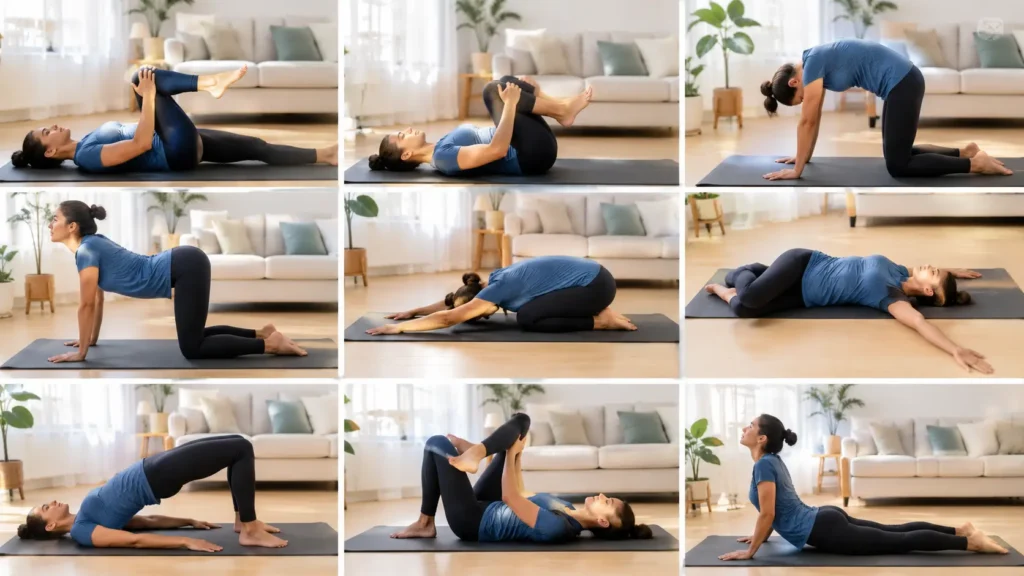
One of the biggest myths about back pain is that you need fancy machines or a personal trainer to feel better. In reality, some of the most effective exercises for lower back pain at home without equipment only need a yoga mat or even just a carpeted floor. Here are a few to try:
1. Cat-Cow Stretch
Get on your hands and knees. Slowly arch your back upward like a cat, then dip it downward while lifting your head, like a cow. Repeat this movement 10 to 15 times. It gently mobilizes the spine and relieves tension built up from sitting.
2. Child’s Pose
Sit back on your heels with your arms stretched forward on the floor. This simple resting pose stretches the lower back and hips at the same time. Hold for 20 to 30 seconds and repeat three times.
3. Pelvic Tilts
Lie on your back with your knees bent and feet flat on the floor. Tighten your stomach muscles and flatten your lower back against the floor, then release. This small movement strengthens the deep core muscles that protect your spine.
4. Knee-to-Chest Stretch
While lying down, pull one knee toward your chest and hold for 15 to 20 seconds, then switch legs. This helps loosen tight lower back muscles without putting pressure on the spine.
5. Glute Bridges
Lie on your back with knees bent, then lift your hips off the floor while squeezing your glutes. Lower slowly. This exercise strengthens the muscles that support your lower back and hips.
These movements are low-impact, beginner-friendly, and can be done in under 15 minutes a day.
How to Relieve Back Pain Naturally with Stretches
If you prefer a more natural, no-equipment approach, stretching alone can go a long way. Many people wonder how to relieve back pain naturally with stretches, and the answer usually lies in consistency rather than intensity. Short, daily stretching sessions tend to work better than occasional long ones.
Here are a few stretches worth adding to your routine:
- Seated Spinal Twist – Sit with your legs extended, bend one knee and cross it over the other leg, then gently twist your torso toward the bent knee. This improves spinal mobility.
- Standing Forward Bend – Stand tall, then slowly hinge forward from your hips, letting your arms hang loosely. This stretches the hamstrings and lower back together.
- Cobra Stretch – Lie on your stomach and gently push your upper body up using your arms, keeping your hips on the floor. This helps counteract the effects of slouching.
- Hamstring Stretch – Tight hamstrings often pull on the lower back, so stretching them can relieve unnecessary strain. Sit on the floor, extend one leg, and reach toward your toes.
A few tips for stretching naturally and safely:
- Never bounce into a stretch; move slowly and smoothly.
- Breathe deeply while holding each position.
- Stop immediately if you feel sharp pain (mild discomfort is normal, sharp pain is not).
- Stretch both sides of the body evenly.
Over time, natural stretching not only reduces pain but also improves flexibility and posture, which prevents future flare-ups.
Best Home Exercises for Chronic Back Pain
Chronic back pain, meaning pain that lasts more than three months, requires a slightly different approach than a one-time strain. For long-term back pain relief, the best home exercises for chronic back pain usually combine gentle stretching with light strengthening work, done consistently over weeks and months rather than days.
Core Strengthening Moves
A strong core acts like a natural support belt for your spine. Some beginner-friendly options include:
- Bird Dog – On hands and knees, extend one arm forward and the opposite leg backward at the same time, keeping your back flat. Hold for a few seconds, then switch sides.
- Modified Plank – Instead of a full plank, try holding a plank position on your knees. This builds core strength without overloading the lower back.
- Wall Sits – Lean against a wall and slide down into a seated position, holding for 15 to 20 seconds. This strengthens the legs and core, taking pressure off the spine.
Low-Impact Movement
For Best Home Exercises for Chronic Back Pain, gentle, regular movement is often more helpful than intense workouts. Consider:
- Daily walking, even if it’s just 10 to 15 minutes
- Swimming or water walking, which reduces pressure on joints and the spine
- Gentle yoga sessions focused on the lower back and hips
Consistency Matters More Than Intensity
Many people with Best Home Exercises for Chronic Back Pain make the mistake of doing too much on a good day, which can trigger a setback. Instead, aim for shorter, consistent sessions most days of the week rather than occasional intense workouts.
Back Pain Relief Exercises for Office Workers
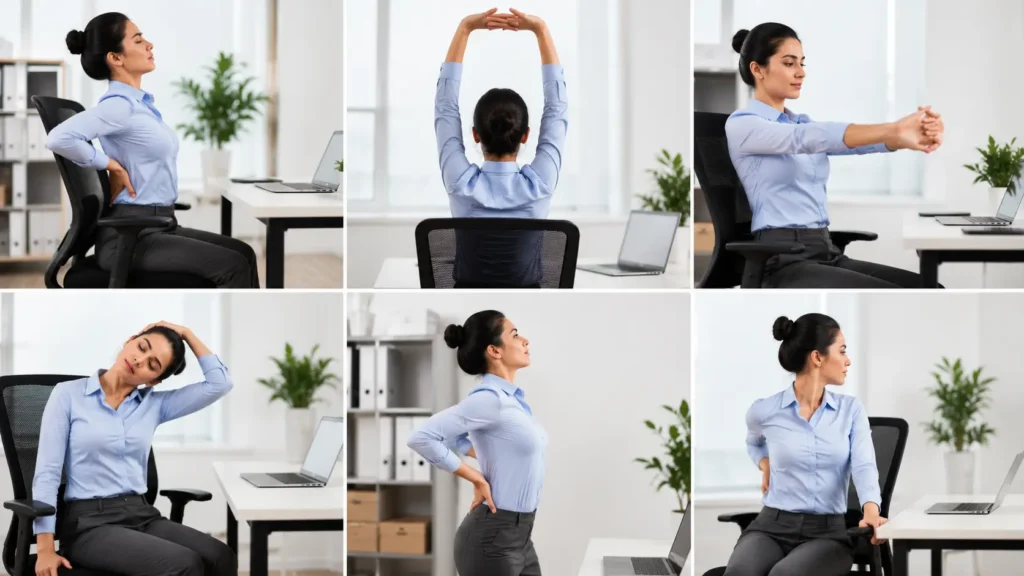
If you spend most of your day sitting at a desk, your back pain is likely tied to posture and long periods of inactivity. Fortunately, there are simple back pain relief exercises for office workers that can be done right at your desk or during short breaks, without needing a change of clothes or extra time.
Desk-Friendly Stretches
- Seated Cat-Cow – While sitting, place your hands on your knees and gently arch and round your back, mimicking the floor version.
- Chair Twist – Sit tall, place one hand on the back of your chair, and gently twist your torso to look over your shoulder. Hold, then switch sides.
- Shoulder Rolls and Neck Stretches – Tension often travels from the neck down to the back, so rolling your shoulders and gently tilting your head side to side can help release built-up tightness.
Movement Breaks
- Stand up and walk for two to three minutes every hour.
- Try a few standing forward bends between meetings.
- Use a standing desk for part of the day if available.
- Adjust your chair so your feet are flat on the floor and your knees are level with your hips.
Posture Reminders
- Keep your screen at eye level to avoid hunching forward.
- Sit with your back supported, rather than perched on the edge of the chair.
- Avoid crossing your legs for long periods, as it can tilt your pelvis unevenly.
Small, consistent changes throughout the workday often make a bigger difference than a single long workout in the evening.
General Tips for Practicing These Exercises Safely
- Warm up first. Even light movement like walking in place for a minute or two helps prepare your muscles.
- Go slow. Rushing through stretches increases the risk of strain.
- Listen to your body. Mild tightness is normal, but sharp or shooting pain means you should stop.
- Stay consistent. Doing a little every day is more effective than doing a lot once a week.
- Combine movement types. A mix of stretching, core strengthening, and light cardio like walking tends to give the best long-term results.
When Should You See a Doctor?
While home exercises help many people, certain symptoms need professional attention. Consider seeing a doctor or physical therapist if you experience:
- Pain that spreads down one or both legs
- Numbness, tingling, or weakness in the legs
- Pain following a fall or injury
- Loss of bladder or bowel control (seek emergency care immediately)
- Pain that doesn’t improve after a few weeks of gentle exercise
A professional can help identify the exact cause of your pain and guide you toward a safe, personalized exercise plan.
FAQs: Best Exercises for Back Pain Relief
1. How often should I do Best Exercises for Back Pain Relief? Most people benefit from doing gentle stretches or exercises 3 to 5 times a week, with daily movement breaks if you sit for long hours.
2. Can stretching alone fix Best Home Exercises for Chronic Back Pain? Stretching helps, but combining it with light core strengthening and regular movement usually gives better long-term results.
3. Is it safe to exercise with back pain? Gentle movement is often safer than complete rest, but it’s important to avoid anything that causes sharp pain and to check with a doctor if the pain is severe or persistent.
Final Thoughts: Best Exercises for Back Pain Relief
Best Exercises for Back Pain Relief doesn’t have to control your daily life. With a simple combination of stretching, gentle strengthening, and better posture habits, many people find real relief without ever stepping into a gym. Start slow, stay consistent, and pay attention to how your body responds. And remember, if your pain persists or worsens, it’s always worth checking in with a healthcare professional to rule out anything more serious.
Read More: How to Get Rid of Belly Fat Naturally: A Complete 2026 Guide