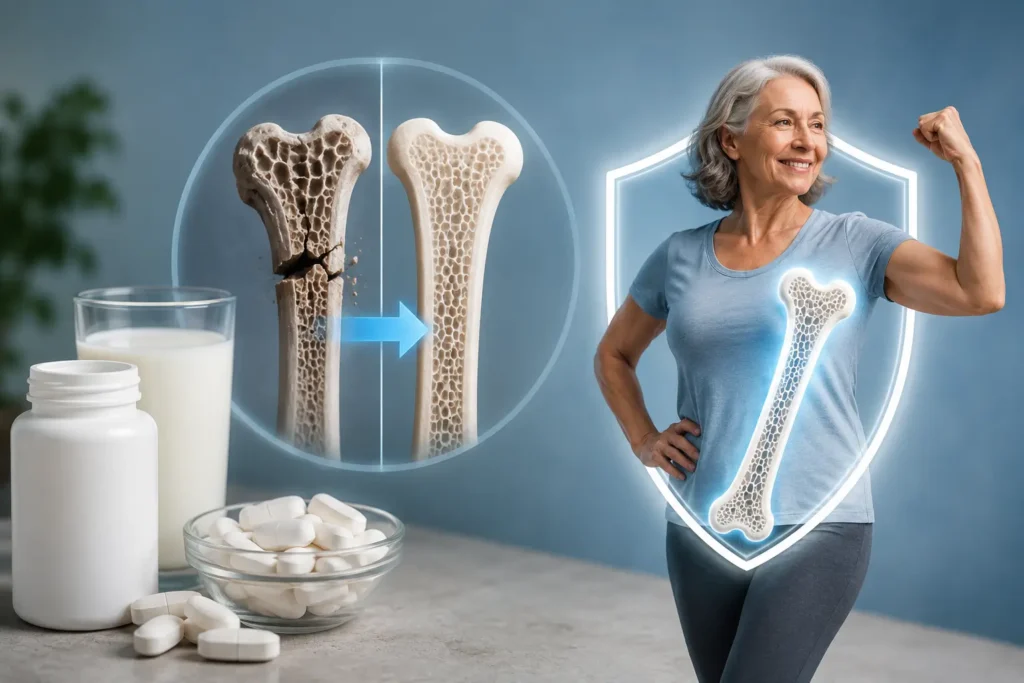
Do Calcium Supplements Prevent Bone Fractures
If you’ve been reaching for that calcium tablet every morning to protect your aging bones — or buying them for a parent — you’re not alone. Millions of older Americans take calcium and vitamin D supplements every single day, trusting they’re doing something meaningful for their bone health.
What the New 2026 Study Actually Found
The study, analyzed data from nearly 154,000 participants across multiple randomized controlled trials. The researchers looked at three groups:
- People taking calcium only
- People taking vitamin D only
- People taking calcium + vitamin D combined
Across all three groups, the results were consistent: supplementation did not significantly reduce the risk of falls or bone fractures in the general older adult population.
This doesn’t mean calcium and vitamin D are worthless. Your body absolutely needs both. But popping a supplement if you don’t have a diagnosed deficiency may not give you the protective shield you were expecting.
Bottom line from the study: For most healthy older adults, these supplements alone are not a reliable fall or fracture prevention strategy.
Read More: Inhaled Insulin for Type 1 Diabetes: Key Facts to Know in 2026
Vitamin D Supplement Side Effects Older Adults Should Know
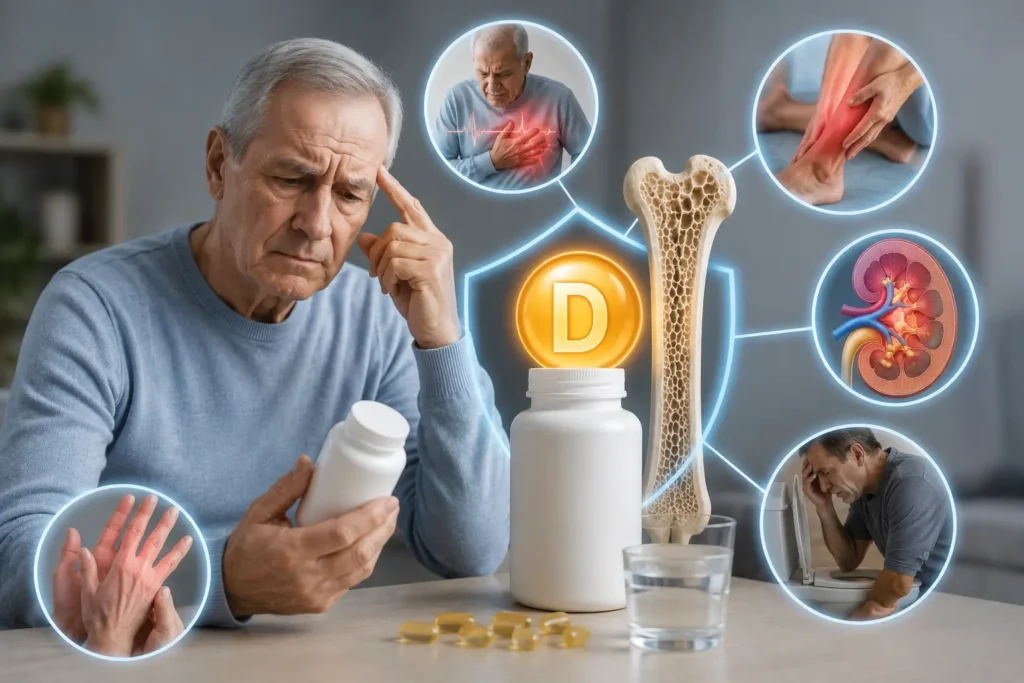
Before you make any changes, there’s another important angle to consider: vitamin D supplement side effects in older adults.
Taking too much vitamin D — a condition called vitamin D toxicity — can actually cause problems, including:
- Nausea and weakness — especially at very high doses
- Elevated calcium in the blood (hypercalcemia), which can affect heart rhythm and kidney function
- Increased risk of falls at very high doses — a 2018 study found that a single annual high-dose of vitamin D actually increased falls by 15% compared to a placebo
- Digestive issues such as constipation or stomach pain from calcium carbonate supplements
This is why doctors now recommend getting vitamin levels tested before supplementing, rather than assuming more is better.
Important: If you or a loved one is currently taking calcium or vitamin D supplements, don’t stop abruptly. Talk to your doctor first. Supplementation is still recommended for people with diagnosed deficiencies or osteoporosis.
Calcium Supplement Not Working for Bone Loss? Here’s Why
If you’ve been taking calcium for years and still feel like your bones aren’t getting stronger, you’re not imagining things.
Here’s what research suggests may be happening:
- Absorption is the real issue. Your body can only absorb about 500 mg of calcium at a time. Taking a large dose all at once means a good portion passes through unused.
- You may need magnesium and vitamin K2 too. Calcium alone doesn’t automatically go to your bones. Vitamin K2 helps direct calcium into the bones rather than into arteries. Many supplements skip this step.
- Without weight-bearing exercise, bone density still drops. No supplement can substitute for the mechanical stress on bones that comes from movement and resistance training.
- Your gut health matters. Poor gut health reduces calcium absorption significantly, especially as we age.
- The supplement form matters. Calcium citrate is absorbed better than calcium carbonate, especially for people over 60 or those with low stomach acid.
If your calcium supplement is not working for bone loss, it may be less about the supplement itself and more about these surrounding factors.
Best Way to Prevent Falls in Seniors Naturally
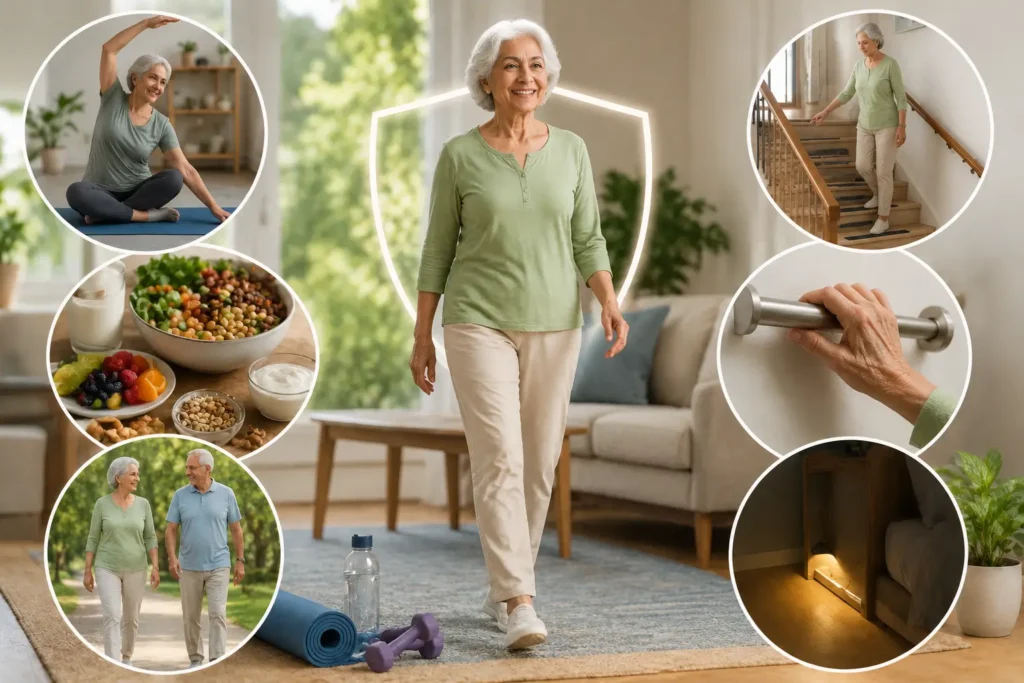
Here’s the good news: fall prevention research is very clear on what actually works. And it doesn’t come from a pill bottle.
1. Balance and Strength Training
A large study analyzing nearly 8,000 older adults found that balance and functional exercises reduce the rate of falls by 24%. The CDC recommends older adults aim for at least 150 minutes per week of moderate-intensity activity.
Effective exercises include:
- Tai chi — one of the most studied and proven fall-prevention practices
- Single-leg stands — hold for 10 seconds on each side
- Heel-to-toe walking — challenges coordination and balance
- Chair squats — builds leg strength safely
- Seated leg raises — for those with limited mobility
2. Home Modifications
- Remove loose rugs and floor clutter
- Install grab bars in bathrooms and near stairs
- Improve lighting in hallways and nighttime pathways
- Use non-slip mats in the shower
3. Medication Review
Many common medications — including blood pressure drugs, sleep aids, and antihistamines — can cause dizziness or lightheadedness. Ask your doctor to review all medications for fall-related side effects.
4. Vision and Hearing Checks
Poor depth perception from uncorrected vision is a significant fall risk factor. Annual eye exams are a simple, powerful tool.
5. Protein and Nutrition
<cite index=”40-1″>About one-third of older adults don’t get enough protein to maintain muscle mass and bone health</cite>, which directly affects strength and balance. Aim for adequate lean protein at every meal — eggs, fish, legumes, and Greek yogurt are excellent choices.
So Should Seniors Stop Taking Calcium and Vitamin D?
Not necessarily — and not without talking to a doctor.
Here’s a practical framework:
| Situation | Recommendation |
|---|---|
| Diagnosed with osteoporosis | Continue supplements as prescribed |
| Confirmed vitamin D deficiency | Supplement under medical guidance |
| Healthy older adult, no deficiency | Prioritize food sources + exercise first |
| Taking high-dose vitamin D | Review with your doctor immediately |
Foods rich in calcium include dairy products, fortified plant milks, sardines, broccoli, and kale. Sunshine remains the best source of vitamin D — even 15–20 minutes of daily outdoor exposure helps most people maintain healthy levels.
Key Takeaways
- A major 2026 BMJ review of 154,000 people found calcium and vitamin D supplements offer little protection against falls or fractures for most older adults
- Vitamin D supplement side effects in older adults can include toxicity and, at very high doses, an increased fall risk
- If your calcium supplement is not working for bone loss, absorption, supplement type, and co-nutrients like K2 may be the issue
- The best way to prevent falls in seniors naturally is a combination of balance training, strength exercises, home safety modifications, and nutrition
- Always consult your doctor before stopping or changing any supplement routine
FAQs
Do calcium supplements prevent bone fractures in elderly adults? According to a major 2026 review of nearly 154,000 people, calcium supplements alone offer little to no meaningful protection against fractures for most older adults without a diagnosed deficiency.
What is the best way to prevent falls in seniors naturally? The most evidence-backed approach combines balance exercises (like tai chi), leg-strengthening workouts, home modifications (grab bars, better lighting), and regular vision checks.
Are there vitamin D supplement side effects in older adults? Yes. High-dose vitamin D can cause nausea, elevated blood calcium, kidney strain, and paradoxically, an increased risk of falls. Always get levels tested before supplementing.
Read More: Screen Time Effects on Children’s Mental Health: What a 2026 Study Found