
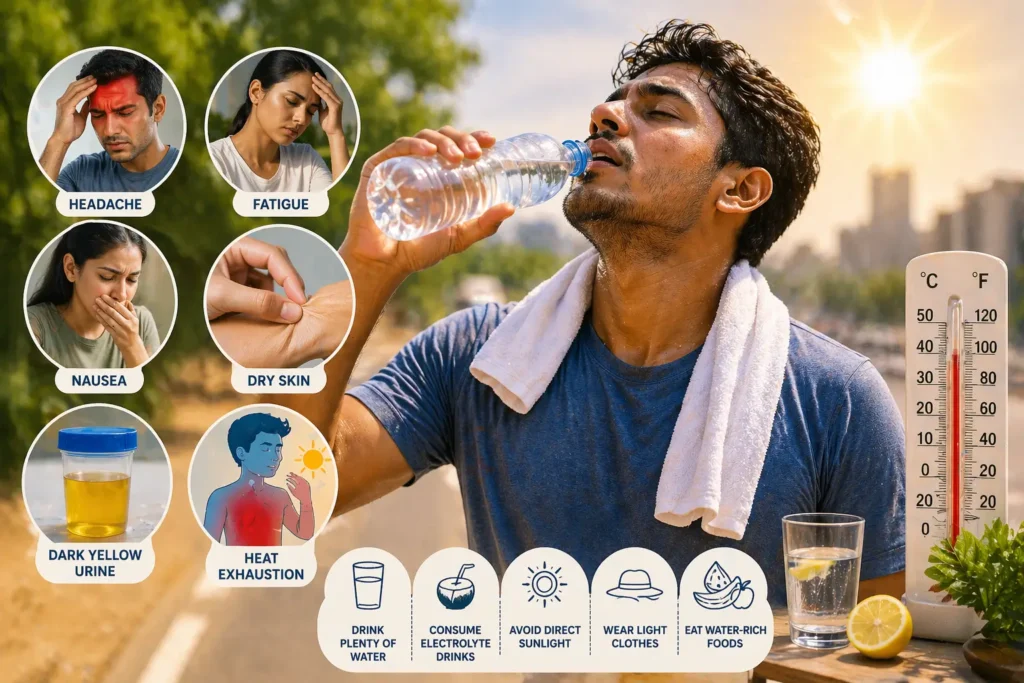
Dehydration is one of the most common — and most underestimated — health conditions in the world. It affects children, adults, athletes, and the elderly alike. And it is not just about forgetting to drink water on a hot day. From chronic illness to certain medications to simply being too busy to take a sip, dehydration sneaks up on people in more ways than most realize.
In this complete guide, we break down everything you need to know about dehydration — what it is, what causes it, how to recognize it, how to treat it, and most importantly, how to prevent it from becoming a serious health problem.
Key Facts About Dehydration
60% of the human body is composed of water
75% of Americans are chronically mildly dehydrated
2% body water loss triggers noticeable performance decline
8–10 glasses of water recommended daily for most adults
What Is Dehydration? — Understanding the Basics
Dehydration occurs when your body loses more fluid than it takes in. Water is involved in virtually every bodily function — from regulating your body temperature and lubricating your joints, to flushing out waste, delivering nutrients to cells, and keeping your brain functioning properly.
When fluid levels drop even slightly below the body’s needs, these critical functions start to slow down. Mild dehydration can cause fatigue and brain fog. Severe dehydration can lead to organ failure, seizures, and — in extreme cases — death.
Important to KnowYour body loses water constantly — through breathing, sweating, urination, and digestion. Even on a calm day sitting at your desk, you are losing water. The question is always whether you are replacing it fast enough.
Common Causes of Dehydration — It’s Not Just About Forgetting to Drink
Most people associate dehydration with a hot day or skipping water during exercise. While those are real causes, dehydration has a surprisingly long list of triggers that many people never consider.
Physical & Environmental Causes
- Excessive sweating: Hot weather, fever, or intense exercise pushes water out of your body faster than most people replenish it
- Vomiting and diarrhea: One of the fastest ways to become severely dehydrated — especially dangerous for young children and the elderly
- Frequent urination: Caused by conditions like diabetes, or medications such as diuretics (“water pills”)
- Burns: Damaged skin cannot retain moisture, leading to rapid fluid loss
- High altitude: At higher altitudes, the body breathes faster and loses more water vapor through respiration
Lifestyle & Hidden Causes
- Alcohol and caffeine consumption: Both are diuretics that increase urine production, causing your body to lose more water than you drink
- Not drinking enough during illness: When sick, many people lose appetite — including the desire to drink water
- Eating too little fruit and vegetables: Around 20% of our daily water intake comes from food, especially fresh produce
- Air conditioning and heating: Climate-controlled environments pull moisture from the air — and from your skin — without you noticing
- Busy schedules: Simply being too occupied to drink enough water is one of the most overlooked reasons for chronic mild dehydration
Read More:- https://vitalmindflow.com/heatwave-2026/
Dehydration Symptoms — From Mild to Life-Threatening
One of the trickiest things about dehydration is that its symptoms can look like many other common conditions. Fatigue, headaches, difficulty concentrating — these are all early signs of dehydration that people routinely blame on stress, poor sleep, or overwork. Knowing what to look for at each stage is essential.
Mild Dehydration
- Thirst (already late signal)
- Dry mouth or lips
- Slightly dark yellow urine
- Fatigue or low energy
- Reduced urine output
- Mild headache
Moderate Dehydration
- Very dark yellow urine
- Dizziness or lightheadedness
- Muscle cramps
- Dry skin that lacks elasticity
- Rapid heartbeat
- Decreased concentration
Severe Dehydration
- Extreme thirst
- Sunken eyes
- No urination for 8+ hours
- Confusion or disorientation
- Rapid, weak pulse
- Fainting — seek ER immediately
The Urine Color Test — Your Easiest Daily CheckPale yellow urine = well hydrated. Dark yellow or amber = drink water now. Brown or reddish urine = seek medical attention immediately. This simple visual test is one of the most reliable at-home indicators of your hydration status.
Dehydration Treatment — What Actually Works
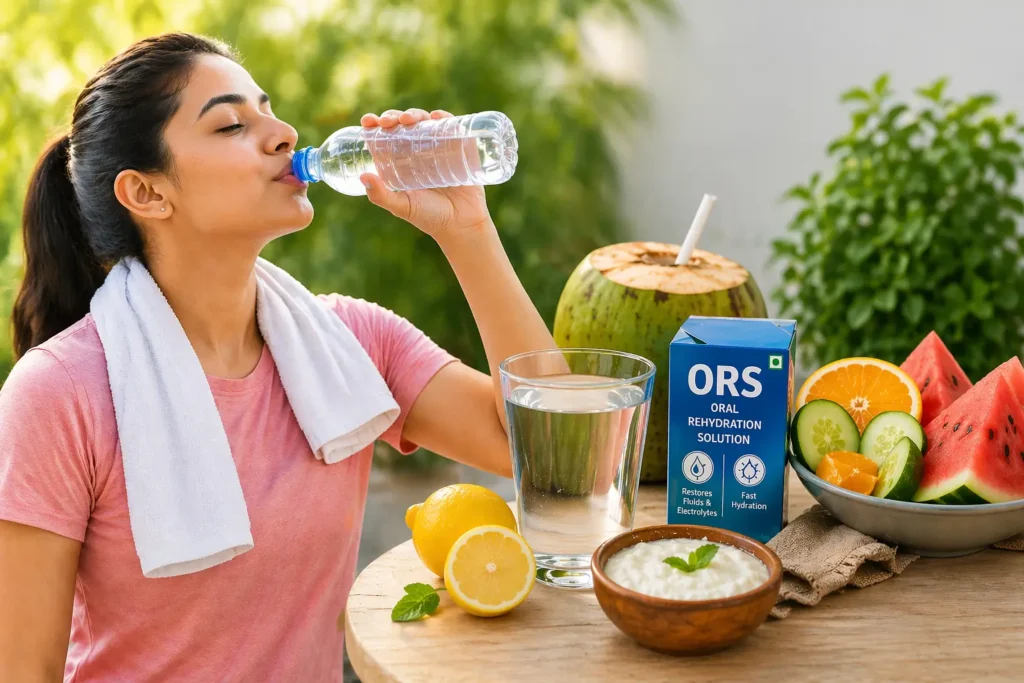
The treatment for dehydration depends heavily on how severe it is. Mild cases can be handled at home in a matter of hours. Severe dehydration is a medical emergency. Here is what to do at each level.
For Mild to Moderate Dehydration (At Home)
- Start drinking water immediately — small, steady sips are better than gulping large amounts at once, which can cause nausea
- Use Oral Rehydration Solutions (ORS): When you sweat or have diarrhea, you lose electrolytes (sodium, potassium) along with water. Plain water alone doesn’t fully restore these. ORS packets (widely available at pharmacies) are specifically formulated to rehydrate efficiently
- Eat hydrating foods: Watermelon, cucumber, oranges, strawberries, and yogurt all have high water content and help restore fluids
- Rest and move to a cool environment: Continuing physical activity while dehydrated makes the situation worse quickly
- Avoid alcohol, caffeine, and sugary drinks: These will increase fluid loss and slow recovery
For Severe Dehydration (Medical Treatment Required)
Seek Emergency Care Immediately If:The person is confused or disoriented, has not urinated in 8+ hours, has a rapid or weak pulse, is fainting or unconscious, or is a child with sunken eyes and no tears. Severe dehydration requires intravenous (IV) fluid therapy administered by medical professionals. Do not attempt to manage this at home.
How Much Water Do You Actually Need? — Daily Intake Guide
The “eight glasses a day” rule is a decent starting point, but the truth is that your ideal daily water intake depends on your body weight, activity level, climate, and overall health. Here is a more complete picture.
| Group | Recommended Daily Intake | Notes |
|---|---|---|
| Adult Men | ~3.7 litres (15.5 cups) | Includes water from food & all drinks |
| Adult Women | ~2.7 litres (11.5 cups) | Increases during pregnancy/breastfeeding |
| Children (4–8 yrs) | ~1.2 litres (5 cups) | More during active outdoor play |
| Teens (9–18 yrs) | 1.6–2.6 litres | Boys typically need more than girls |
| Athletes / Active Adults | +500–1000 ml extra | Per hour of intense exercise |
| Elderly (65+) | At least 1.5–2 litres | Thirst sensation weakens with age |
How to Prevent Dehydration — Simple Habits That Make a Real Difference
Preventing dehydration is far easier than treating it. The good news is that most prevention strategies are free, simple, and can become effortless habits with a little consistency.
Build a Daily Hydration Routine
- Drink water first thing in the morning: You wake up after 7–8 hours with no fluid intake. A glass of water before coffee or breakfast immediately gets you ahead of the deficit
- Carry a reusable water bottle: Keeping water visible and accessible is one of the most effective behavioral nudges for drinking more throughout the day
- Set phone reminders: If you tend to get absorbed in work, a reminder every 90 minutes to take a few sips can transform your daily intake
- Drink before, during, and after exercise: Do not wait until you feel thirsty during a workout — drink 500 ml before, and keep sipping every 15–20 minutes during activity
- Eat more water-rich foods: Aim for at least 5 servings of fruits and vegetables daily — many contain 85–95% water
Top Hydrating Foods to Add to Your Diet
- Watermelon — 92% water, also rich in electrolytes
- Cucumber — 96% water, one of the most hydrating foods available
- Oranges — 86% water, plus Vitamin C and potassium
- Yogurt — 85% water and a good source of sodium and potassium
- Strawberries — 91% water, easy to snack on throughout the day Lettuce & celery — over 95% water, perfect salad bases
Pro Tip — The 2-Before-1 RuleFor every cup of coffee or alcoholic drink you consume, drink two cups of water afterward. This simple rule offsets the diuretic effect of caffeine and alcohol and keeps you consistently hydrated even on social occasions.
Who Is Most at Risk? — Special Groups to Watch
While anyone can become dehydrated, certain groups are significantly more vulnerable and need extra attention and proactive care.
- Infants and young children: A higher surface area relative to body weight means they lose fluid proportionally faster. Diarrhea and vomiting in young children can lead to dangerous dehydration within hours
- Elderly adults (65+): The sensation of thirst diminishes with age. Many older adults do not feel thirsty even when significantly dehydrated — making scheduled drinking essential
- Athletes and outdoor workers: Significant sweat loss during strenuous activity, especially in heat, creates rapid fluid and electrolyte depletion
- People with diabetes: High blood sugar levels cause the kidneys to excrete more water, increasing dehydration risk
- Pregnant and breastfeeding women: Increased physiological demands mean higher fluid requirements throughout the day
FAQs About Dehydration
Can you be dehydrated even if you drink water regularly?↓
Yes. If you are drinking water but also consuming large amounts of caffeine or alcohol, sweating heavily, or experiencing illness with vomiting or diarrhea, your body may still be losing more fluid than you are replacing. Also, if you drink only plain water without replenishing electrolytes during heavy sweating, electrolyte imbalance can occur even with adequate water intake.
Conclusion — Small Habits, Big Difference
Dehydration is one of those health issues that feels minor right up until it isn’t. The headache you are ignoring, the afternoon energy crash you blame on a bad night’s sleep, the difficulty concentrating in a meeting — these could all be your body quietly asking for more water.
The beautiful thing about preventing dehydration is that it requires no expensive supplements, no complicated diet, and no dramatic lifestyle changes. It simply requires attention and consistency — a bottle of water on your desk, a habit of drinking before coffee in the morning, eating more cucumbers and oranges, and checking the color of your urine once in a while.
Your body is mostly water. Treat it like the water-dependent machine it is. Start today — not when you are thirsty
Read More:- https://vitalmindflow.com/ai-in-healthcare/